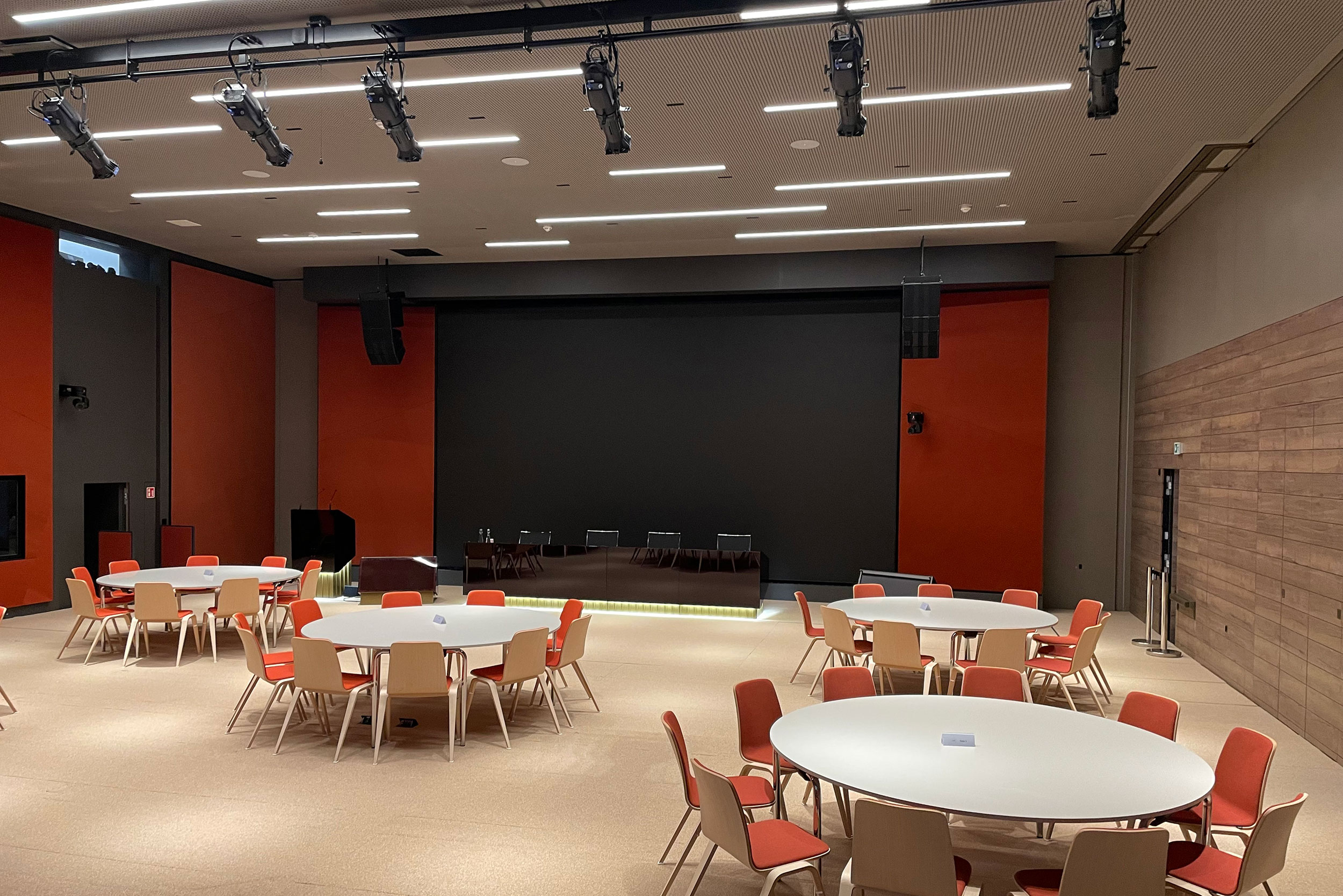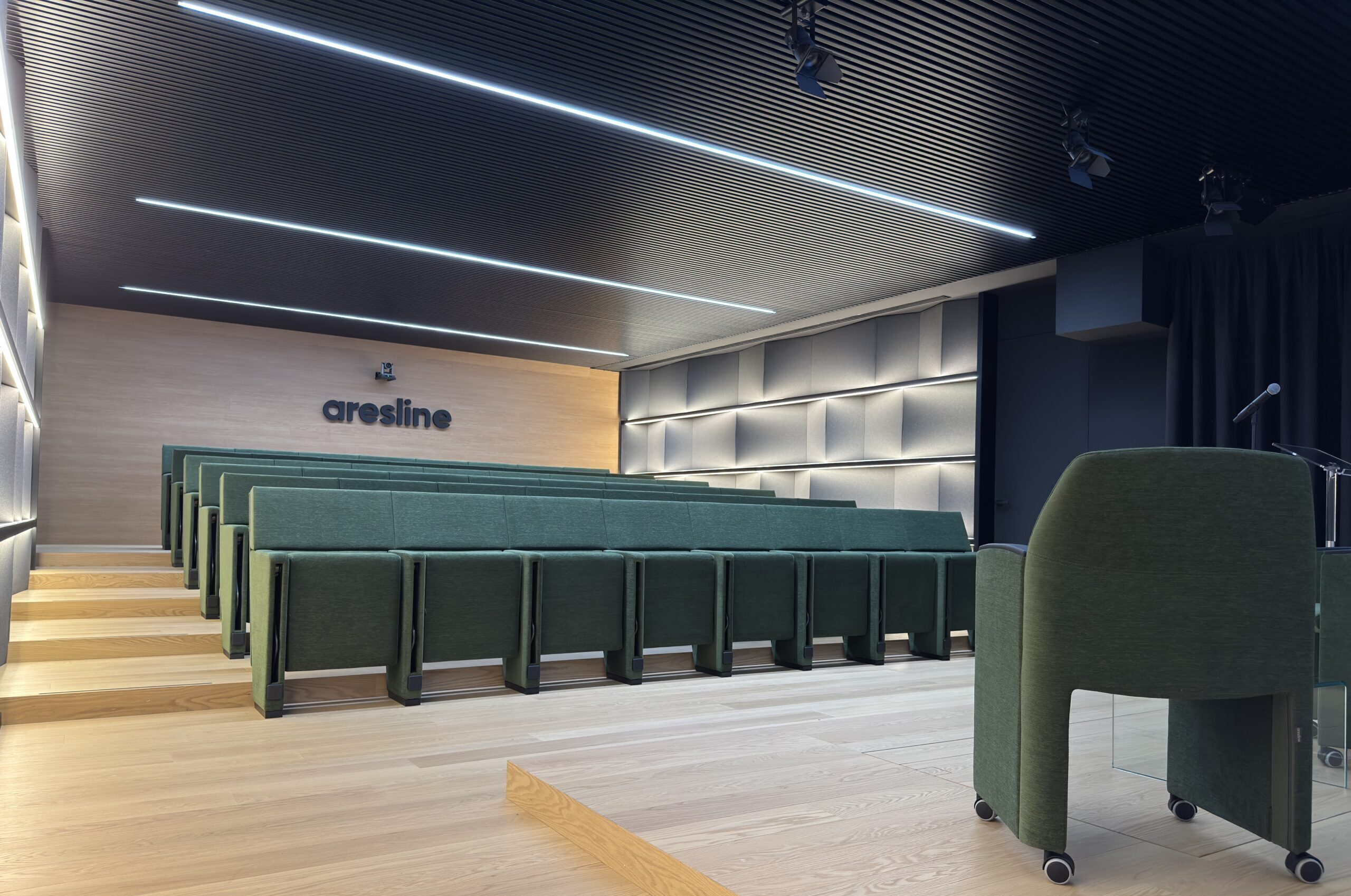
Unified Operations Centre of ACTV
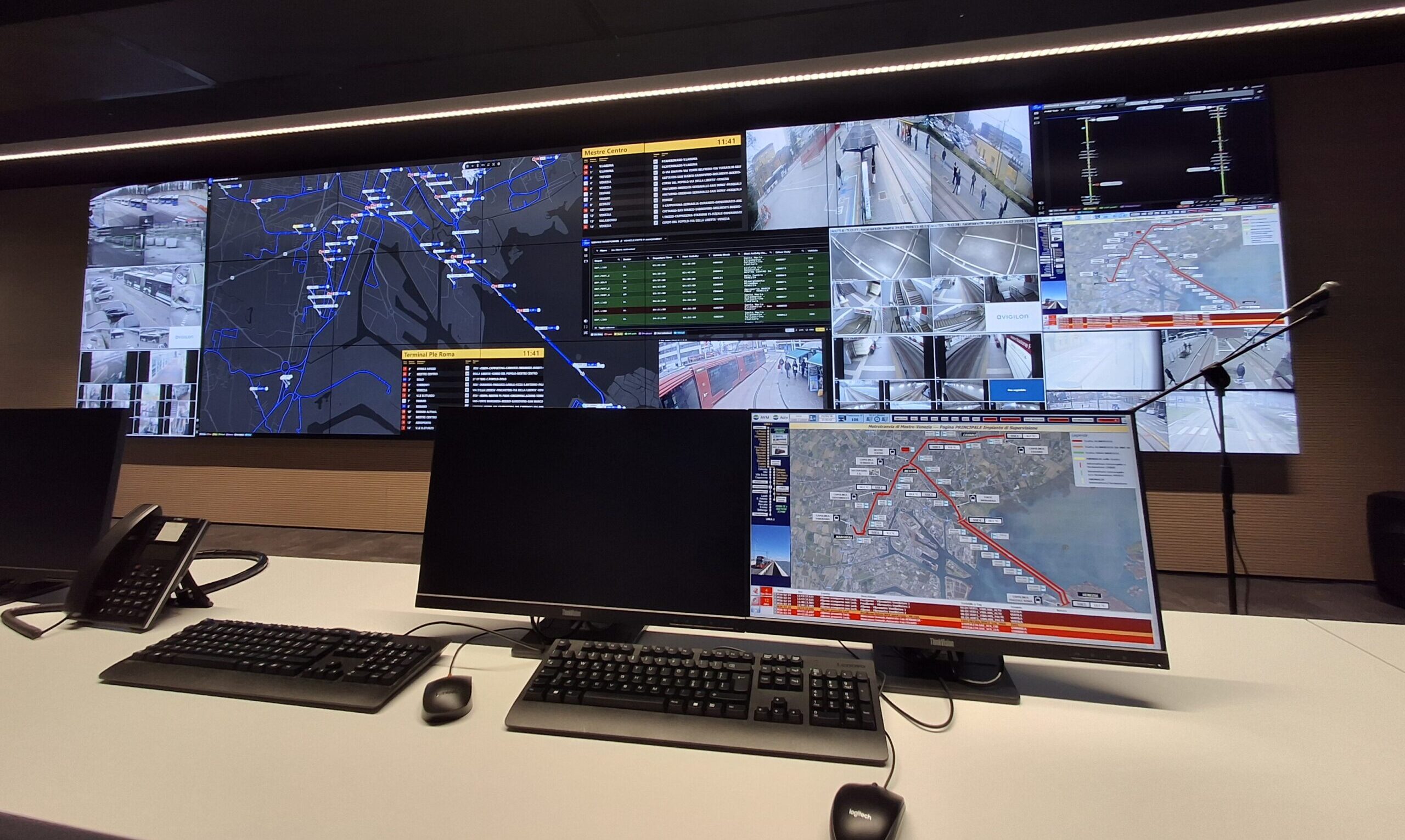
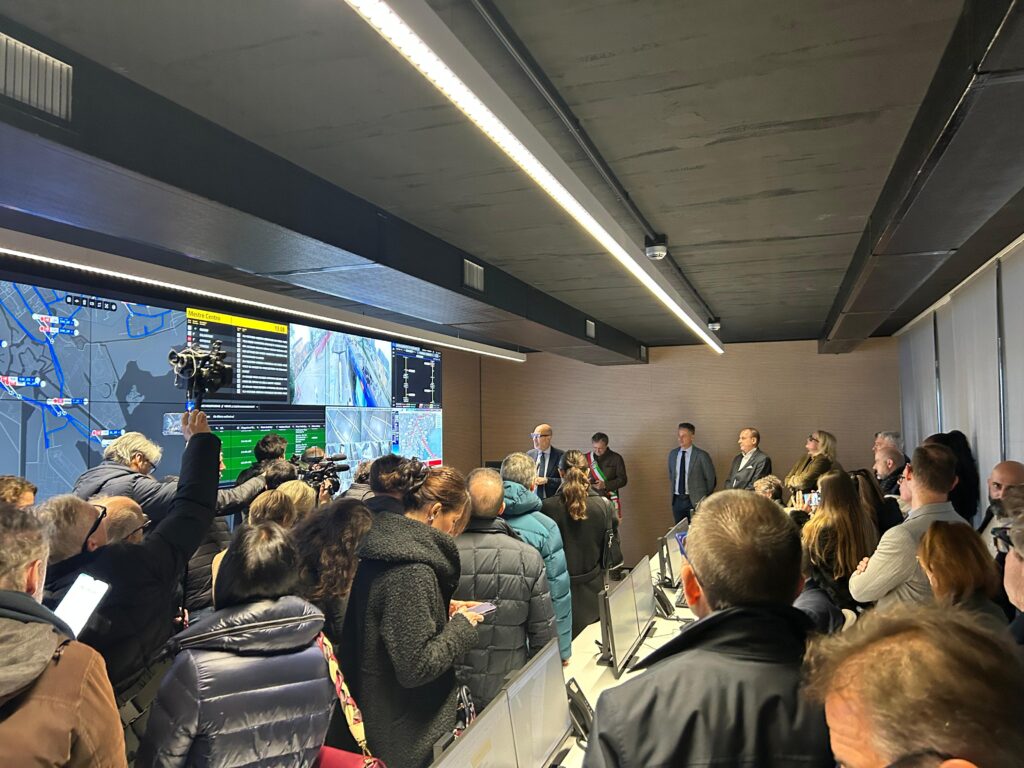
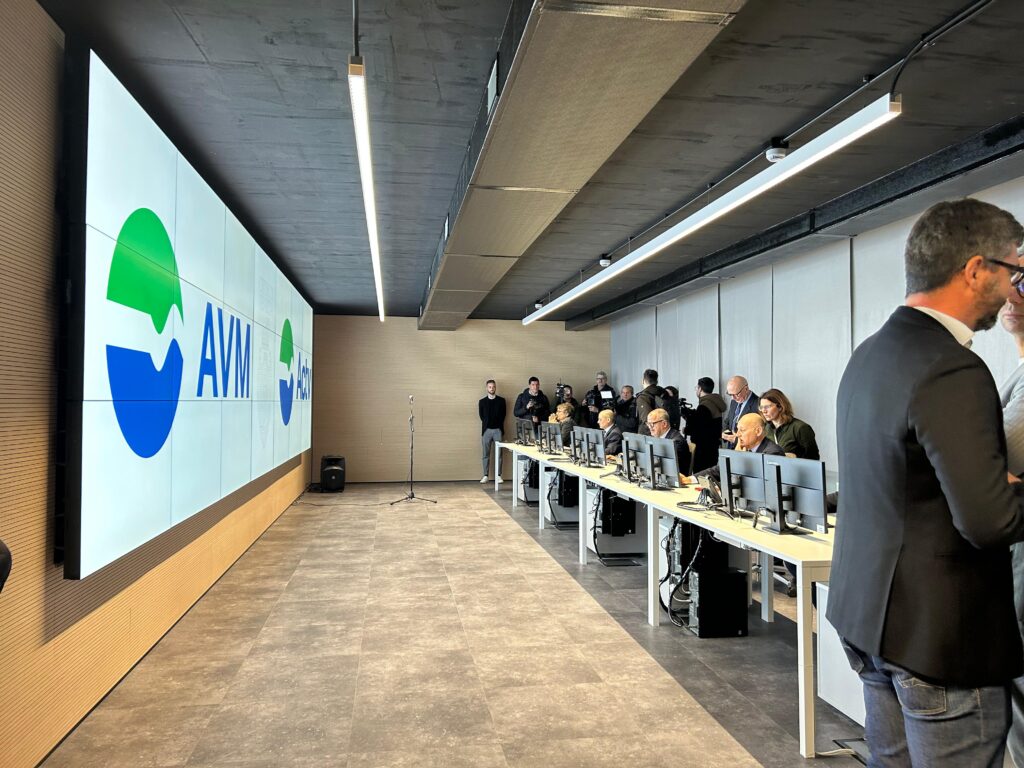
Inaugurated at the end of February, the new Unified Operations Centre of ACTV — the company responsible for local public transport in the Venice area — represents a complex and highly significant project. From here, buses, trams and the People Mover are monitored and coordinated in real time, providing an integrated view of mobility and the info-mobility systems connected to the transport network. As Venetians ourselves, this commission meant a great deal to us: an opportunity to contribute to an essential infrastructure for our territory, as well as a chance for professional growth and to consolidate our role as a trusted technical partner.
The creation of the new operations room arose from a number of distinct needs. On one hand, the growing complexity of local traffic — shaped by commuter rush hours and the enormous tourist flows that share the same transport arteries across the Venice area — demanded advanced tools for fleet and infrastructure monitoring. At the same time, the project addressed the need to consolidate several existing control stations into a single environment, improving coordination between operators and enabling faster response in critical situations.
Furthermore, in line with recent developments in control room design, the facility supports data acquisition and analysis while also functioning as an information-sharing hub with external stakeholders. Data can be transmitted in real time to other institutional bodies, such as law enforcement agencies and territorial coordination authorities.
Project guidelines
The project requirements were defined by ACTV and developed by a working group comprising Thetis, as lead contractor and project coordinator, SO.GE.di.CO. as construction executor, Cavea Engineering for the design, and 3G Electronics for the supply of control room equipment. The scope of work covered multidisciplinary design, supply, installation, and a two-year maintenance contract. Key priorities included 24/7 operational continuity and full network and equipment redundancy, ensuring uninterrupted functionality even in the event of anomalies or emergencies. Additional requirements included integration with the existing IT infrastructure and the ability to scale and upgrade the system in line with technological advances or future updates to protocols, software and hardware.
A further layer of complexity arose from the need to install the new control room within an existing building, which required design adaptations and careful site planning to avoid disruption to ongoing operations.
The wellbeing of the operators, who carry out a demanding and responsible role on continuous shift patterns, was at the forefront of our thinking – our CTO Marco Trame explained. For this reason, we adopted a 360° approach to space design, incorporating acoustic comfort solutions, lighting quality and ergonomic workstation design. This is a defining philosophy for us: technology is not an end in itself, but a means to support people who use it
Technology, comfort and integration: a multidisciplinary approach
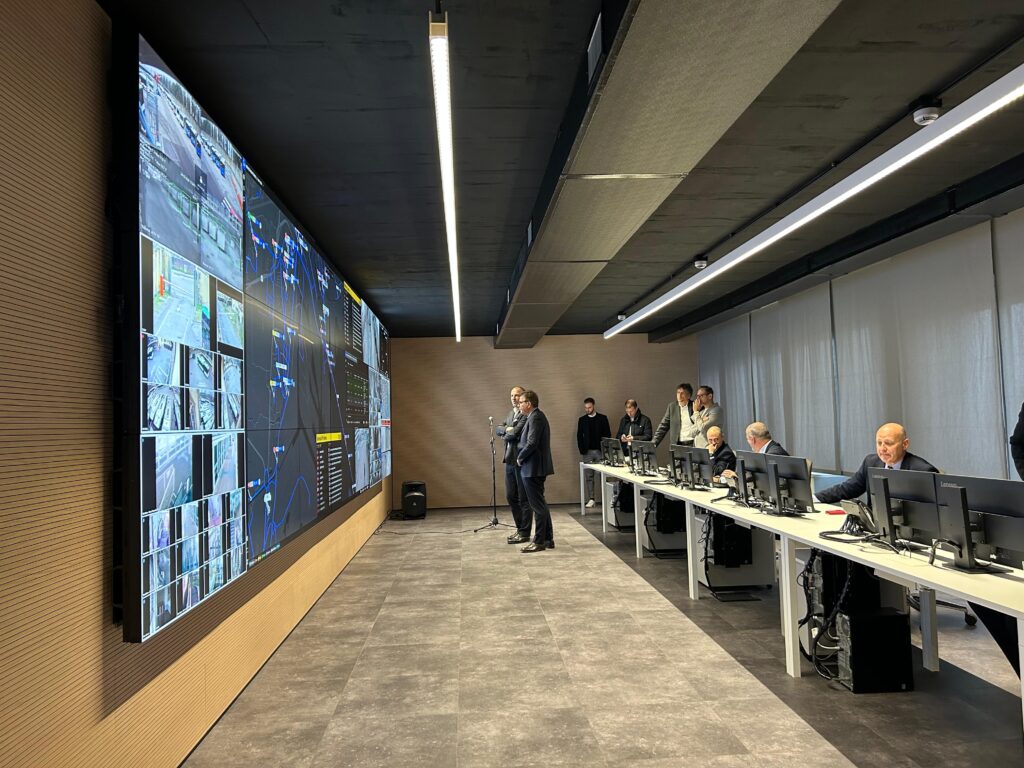
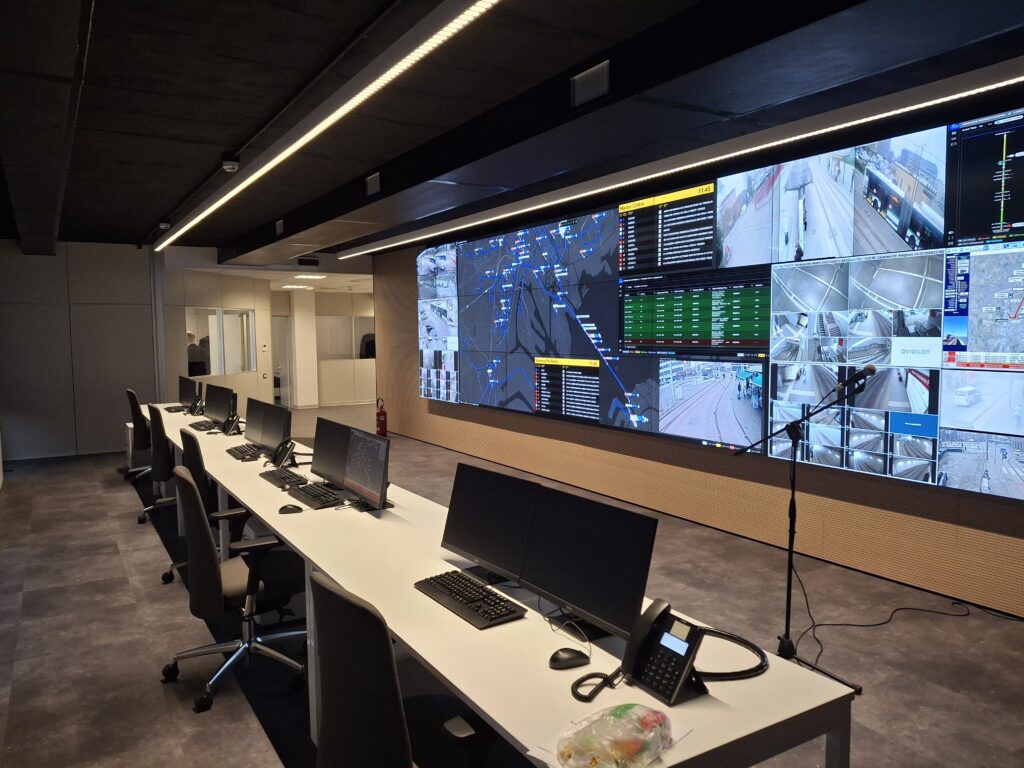
The technological heart of the new control room is the supervision videowall, composed of 21 professional 55″ displays in a 7×3 configuration, designed to provide a simultaneous, real-time view of information from all transport systems. The Hiperwall software platform manages up to 100 simultaneous IP video streams — from cameras, supervision systems and similar sources — as well as additional inputs such as computers, servers and web applications. Thanks to multi-level privilege management, operators can divide the videowall into dedicated functional areas corresponding to the different services: People Mover, tram and bus network.
Alongside the multimedia component, the project required a comprehensive intervention on the IT and network infrastructure, including high-performance structured cabling and integration with the corporate LAN.
Considerable attention was paid to the acoustic comfort of the environment, given that verbal communication is essential in a control room setting. Wall-mounted sound-absorbing treatment was installed to keep reverberation times within optimal levels for speech-oriented spaces, and the wall facing the technical room was acoustically isolated to mitigate noise generated by IT equipment and infrastructure.
The lighting design was also developed to provide optimal working conditions at workstations with video display units, in compliance with European standards, using dimmable linear luminaires to balance ambient luminance with that of the videowall.
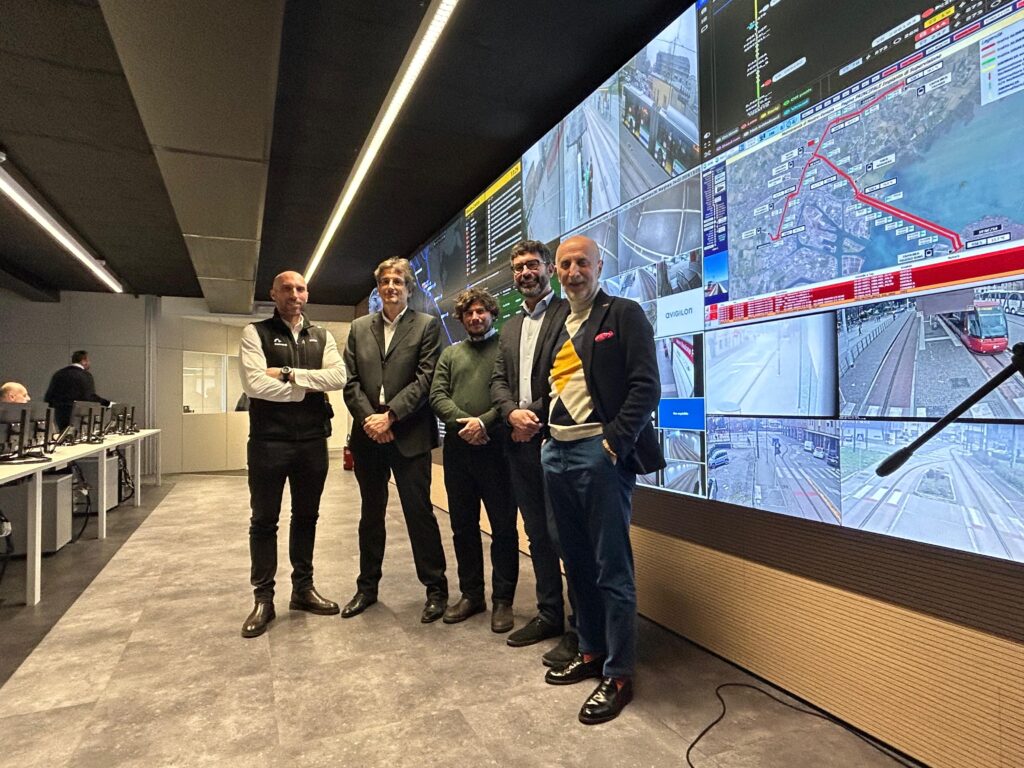
Eng. Tommaso Marella and Eng. Edoardo Rossetto of Thetis recall with satisfaction that the genesis of this project — outlined in the ACTV tender — created the opportunity to bring together a working group of Venetian companies that combined experience, technology and passion to design and deliver innovative solutions. “The result achieved makes us proud,” they stated, “and was made possible by the synergy the working group developed with ACTV and the project manager Eng. Peter Penzo”
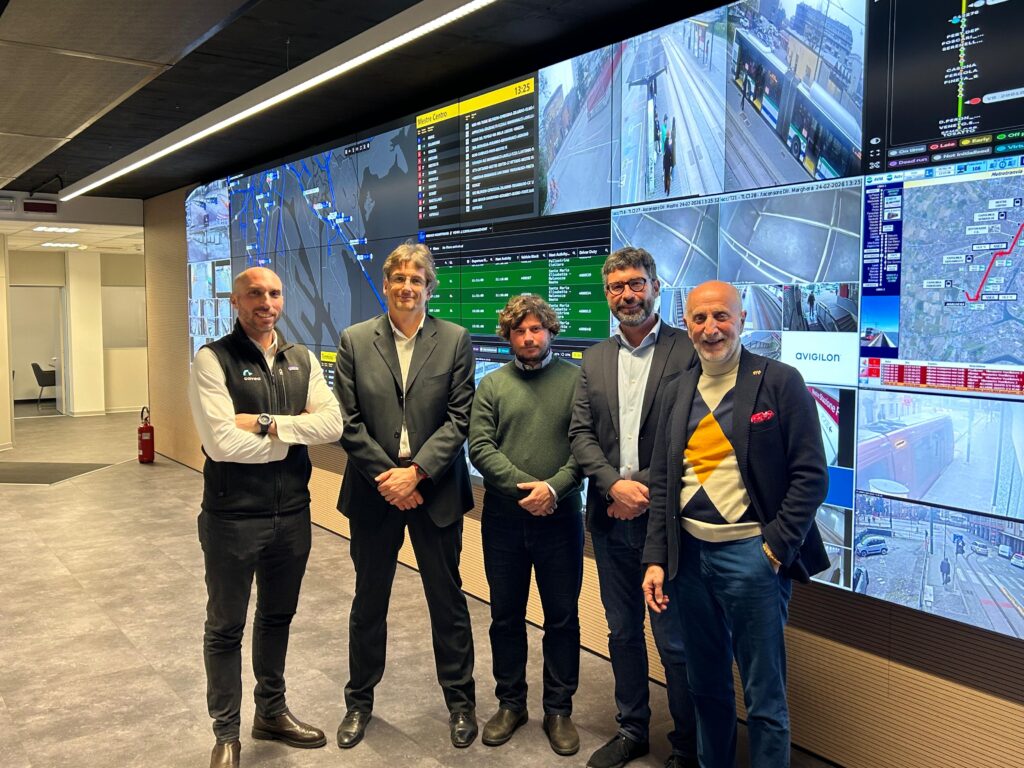
The final outcome demonstrated the group’s ability to manage the complexity of a multidisciplinary public procurement project — from design through to maintenance — with an integrated approach focused on operator wellbeing and full regulatory compliance.